Category: Interviews

On National Poetry Day: getting autumnal, Medieval women, currently reading
An blog update for National Poetry Day! To celebrate, not only have I just recorded an interview with the immensely talented Tishani Doshi for Planet Poetry, but this evening I’ll be at Hastings Stanza for some poem sharing and workshopping. All very fitting.

Everything’s cranking up now it’s the autumn: the publicity machine for various Christmas concerts, book projects, the podcast starting its fifth season, the garden to be tidied up (though the tomatoes keep coming)…

A week or two ago I was in Seaford reading poems mostly from the new collection (still forthcoming!), plus a couple from Foot Wear. I took with me the last five copies of Foot Wear and sold four, which means there’s only one left of the limited edition run. Not sure if it’s a left or a right foot, teehee. Perhaps I should auction it??

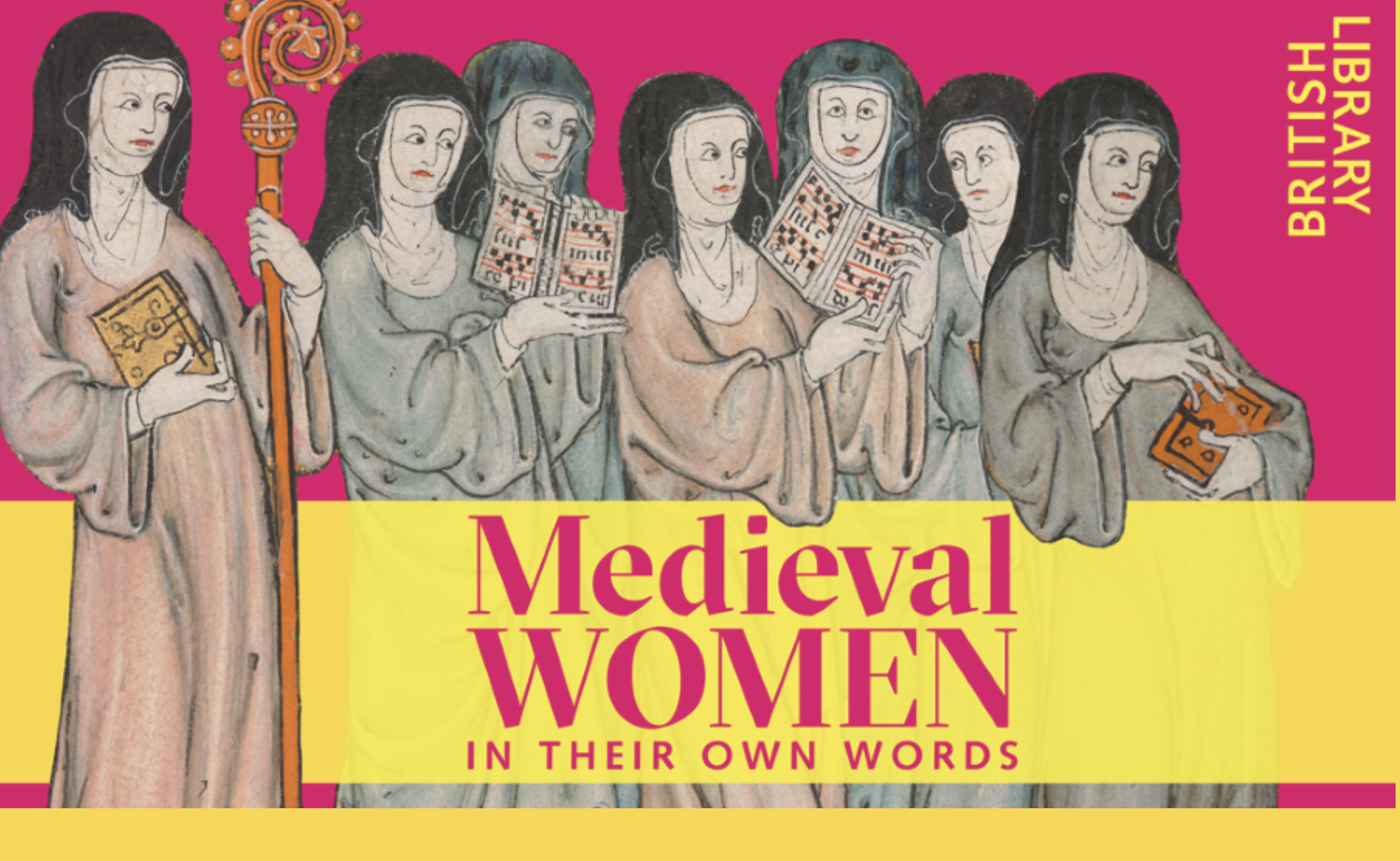
Meanwhile I was very excited to see there’s a forthcoming exhibition at the British Library called ‘Medieval Women: In their Own Words’ which has started me submitting my novel to another round of agents. Medieval women is a thing! Just look at Janina Ramirez on TV, and her brilliant book Femina. You may have guessed I’m a bit of a fangirl. Come on, lit agents: there’s a lot of interest in strong 14th century women!

In submissions news, I’ve had a bit of a dry summer as regards writing new poems, but I’m very pleased to have one in the new Frogmore Papers and another forthcoming in Black Nore Review on October 17th.

Currently reading: Ellen Cranitch’s new collection Crystal, and Tony Hoagland’s final collection Turn up the Ocean – the latter I picked up in the Poetry Book Shop in Hay on Wye in the summer. Both books are from Bloodaxe.


The positives of submitting less to magazines

I recently came across this blog post by Naush Sabah about why we send our poems to magazines (or not). I’m in agreement with her on just about all of it, although I needed telling some things; for example:

You needn’t seek to publish every poem you write. Some work is for the drawer, some work is for an audience of one or two friends, some work is better within a book, some work is for the trash and, if you’re lucky, a key to unlock the next piece of writing.

It hasn’t been a conscious thing, but when I think about it, I can put most poems I write these days into one of these categories. I haven’t been sending out as many poems to magazines as I used to, and among those I have sent not many have been accepted. I’ve been a bit disillusioned about this to be honest.

And yet at the same time I can see that quite a few of these poems belong with others in order to have the impact I’m after. In other words, in a collection.

A few might even be poems I should be treating as stepping stones to the actual poem I’m after, the ‘key to unlocking the next piece of writing’ that Naush talks about in her piece.

A funny thing to be saying, given my unofficial role as cheerleader for submitting to magazines. I still believe in the magazines, and still encourage people to send in their poems. But it’s what I’ve always said: it’s not a strategy that suits everyone all the time. Goals and ambitions change.

Which reminds me, Sarah Salway interviewed me recently about submitting to magazines, for her lovely Everyday Words project. Sarah is a powerhouse of creativity, and if you haven’t seen it before, do watch this excellent TED talk she gave in 2019, ‘In praise of everyday words’:

Embed Video

So this is Christmas, and what have I done?

Oh no! I can see I haven’t posted for several weeks, has there really been nothing to talk about? Let me see…

First of all, nothing to do with poetry but my Covid experience was pretty mild in the end. So as far I’m concerned the jabs were worth it. Plus we’ve made it to Christmas without having to cancel a single concert, which is a result, and in fact I’ve just got back from a bout of rustic carol singing on the outside terrace of the fantastic Chaseley Trust. So a big yay for Christmas.

Meanwhile, perhaps you recall my saying I wouldn’t be sending out any more poems to magazines for a while? Well, after putting out my quarterly spreadsheet I was in a ‘sending out’ mood so I confess I did toss some poems in the direction of one or two publications. I’m testing the water a bit with some new work. I tried two poems on a Canadian publication called Parentheses – submitted at around 6pm, rejected by 7am the next morning. Now that’s what I call emphatic! There was no suggestion they would welcome any more, so hey ho. Other work is still out to various places, and I have a few more items itching to go out. Maybe in the new year. On a positive note, one poem has been solicited by the Mary Evans Picture Library ‘Pictures and Poems’ blog (forthcoming), and another will be coming out in the Frogmore Papers 100th edition next year.

I’ve really appreciated my Hastings Stanza workshopping cohorts this year and was particularly thrilled that we were able to start meeting again face to face. What a difference it makes. I’ve developed such an aversion to meetings on Zoom. I can just about tolerate Zoom readings, but if my course at York in 2022-23 turns into a permanently online thing then I can’t see myself returning.

My reading habits have definitely mutated in the last two years, in that I’m reading more novels, in particular historical crime – it started with Eco’s The Name of the Rose which I became a bit obsessed with, and then I had to read everything by CJ Sansom. On the poetry front I’m currently reading Deformations by Sasha Dugdale in preparation for interviewing Sasha for the Planet Poetry podcast, and the book is stimulating all kinds of ideas in me. I’ve also got Sasha’s The Red House on my ‘to read’ pile, from her back catalogue. Then there’s Myra Schneider’s Siege and Symphony which I’m reviewing for the Frogmore Papers, and latest copies of The Rialto and Poetry calling me. Recently swung onto my radar is the work of Alexander Pope – I’ll probably bore you with more about that in 2022.

The newest episode of Planet Poetry is in the bag and coming out tomorrow. It’s a Christmas special featuring an interview with Di Slaney (Candlestick Press) and Sharon Black (Pindrop Press), both of them poets as well as publishers, talking about their writing and their publishing practice. Peter Kenny and I are proud of the fact that we are now 5 episodes into our second season – I think that makes us veterans in poetry podcasting terms! We’ve already got some brilliant guests lined up for 2022 so if you haven’t already, please do subscribe ‘wherever you get your podcasts’, as they say.

That’s it – a very Happy Christmas to you and yours, and every good wish for the new year. A huge THANK YOU for reading and commenting on this blog, supporting the submissions spreadsheet and my other various projects – I am truly grateful.

New podcast, plus new updated ‘Guide to getting published in UK poetry mags’

Eeek!

I’m trying to fight a sense of overwhelm at the moment even though it’s all good things that are overwhelming me. Keeping my weekly work commitments going and doing all the reading and cogitating required for my course, which this term is a whistle-stop tour of the English Lit canon (week 3: Virgil & Ovid, Week 4: Chaucer and Dante, etc), plus thinking up a topic for my first essay. Finishing up the updated version of my 2018 ‘Guide’ – see below – I KNOW, why do that now? But there you are, it’s done. And of course the Planet Poetry podcast (see below) about to launch on the apparently auspicious date of October 21. Help!

Recent reading

Although I have the latest issues of Poetry, The Poetry Review and The Frogmore Papers to read, sadly they have been scarcely opened.  At the moment I’m tackling Chaucer’s ‘The House of Fame’ – now that’s a great title! – my first bit of Middle English untangling since school, where I think we spent an entire year reading just the Prologue to the Canterbury Tales. Then there’s Dante’s De Vulgari Eloquentia which I need to be ‘ready to discuss’ on Monday morning. Gawds.

Before the madness really set in I did enjoy Rachel Long‘s My Darling from the Lions (Picador), which is up for the Forward Prize I think. I struggled a bit with Shine, Darling (Oxford Road Books) by Ella Frears, also up for the Forwards and now also on the TS Eliot shortlist, so maybe I should give it another go. Lovely to see Sasha Dugdale on that list too – I haven’t read her latest collection but I really enjoyed Joy (Carcanet 2017).

A Guide to Getting Published in UK Poetry Magazines - 2nd edition

Updated ‘Guide to getting published in UK Poetry Magazines’

It’s been two years since the first edition, which sold out rather quickly, so I felt the time was right for an update. If you didn’t buy it the first time, or missed out, now’s your chance.

If you do have the 2018 book and are wondering whether its worth getting the new one, I can tell you that much of the content is the same, BUT

  • I’ve consulted more magazine editors and have included their insights
  • I’ve updated and expanded the magazine profiles (some have gone, others are in) and the resources section
  • The layout and organisation is (I think) improved and clearer

The cover price is £6 including UK postage – see this page for all the info about what’s in it, and to buy. Publication date is November 1st but you can preorder now.

If you’d like it sent to an address outside the UK, or would like to order more than one copy, do drop me a line first and I can confirm what the postage will be. Many thanks.

Planet Poetry the new podcast from Robin Houghton & Peter Kenny

The Podcast!

It’s here… well, the trailer is up, Episode One to follow very soon… Planet Poetry is a wee project from myself and Telltale poet pal Peter Kenny. We’re on a learning curve figuring out stuff like ‘why does Robin sound like she recorded this in the bathroom’ and ‘what the heck is that whining sound and how to we nix it’. But the main thing is, we’ve managed to pin down some fascinating poets for a chat, and that plus Peter’s and my musings on things poetical means we’re hoping each episode is an entertaining 40 mins or so. I hope you are enticed to have the odd listen, or even subscribe!

It’s a bit frightening, putting our voices out there, but we’re having fun doing it (so far!)


Advice to a poet, and a curious birthday thing

Q: Who are these poets and what do they (almost) have in common?

poets-born-on-29Oct

(Answers below…)

Advice lines

Recently I came across this delightful and very relevant piece on the Poetry Ireland website:

Advice to a Poet – words of wisdom from Maurice Harmon, critic, biographer, editor, literary historian and poet.

Even the title has an authoritative feel! But this is no harangue. When I read it I’m picturing a kind but firm teacher, one who challenges but encourages at the same time. So many good thinking points (‘All forms of laziness are fatal in poetry’ ….’You must, and will, find your own way of saying’ … ‘Poetry is above all a way of telling the truth’…’Does it make a difference?’)  I don’t know about you but I have to read essays like this on a regular basis, to remind myself what the hell I’m supposed to be doing, because it is so, so easy to stray down those lazy byways or lose sight of the reasons I’m trying to write poetry.

Advice comes in many forms of course and sometimes poets don’t even know they’re giving it. One of the things I like about Rattle magazine is the regular poet interview at the back, and I’m just at the section of the Eavan Boland Sourcebook where we get to read interviews with her. There are always gems to be found in these chats, I think; there’s something both voyeuristic and educational about hearing what a poet has to say about their working methods, inspirations and general thoughts about what gives.

On a somewhat drier note, in the spirit of starting my ‘literary education’ from the beginning, I’m also reading Aristotle’s Poetics, translated by Anthony Kenny (Oxford World’s Classics edition 2013), although I’ve learned quite quickly that it’s actually about tragedy and ‘the epic’ rather than lyric poetry, which doesn’t get a look in. Aristotle rather slyly suggests early on that he’s going to come to ‘comedy’ in due course. And then he doesn’t. What a tease.

Calling all poets with late-October birthdays

I’m fast approaching a ‘landmark’ birthday, and I’m reminded that I share it (the date, not the year) with fine poet Sarah Howe (above right). So just for fun I got researching poet birthdays to see who else is in this 29th October club. According to his family at the time, John Keats was born on October 29th, although official records list it as 31st. Killjoys! Mary Herbert, Countess of Pembroke only just missed out – she was born on 27th October, as was Dylan Thomas and Sylvia Plath. So, if you, or any poets you know of, were born on October 29th (or let’s say 2 days either side, although that’s not quite the ticket) do let me know and we’ll sort out a club logo or secret handshake or something. (When handshakes are allowed again, of course.)

A few thoughts on ‘truth’

One of the things I like very much about the US poetry magazine Rattle is the ‘Conversation’ at the back. It’s basically editor Timothy Green interviewing a poet, presented as a verbatim conversation, and it feels so immediate, like you’re listening in to a phone call or something, or an unedited podcast. The fact that it’s date-stamped, so you know when the chat took place, adds to its appeal. I can read it and think ‘Oh yeah, on February 18th 2018 I was doing XYZ, and these guys were having this conversation…’

I can’t really explain why I like that. It just seems to ground it in the real world. The interviews are never stilted, you can’t ‘hear’ the interviewer shuffling papers or thinking about the next question he’s going to ask. The conversation feels like a free flow. When there’s a lull or a sticky moment you sense that. But it’s never cosy or time-wasting. It’s juicy stuff. And it seems really real. Would it spoil my enjoyment if I found out it was scripted, or edited, or that it’s an amalgam of several conversations, or other interviews? Or if the interview (or even the interviewee) was fictional?

Since working on our Telltale anthology ‘Truths’ I suppose it’s heightened my awareness of what ‘truth’ in poetry means to me personally. And it’s fascinating to eavesdrop on others’ conversations on the topic.  There’s a section in the most recent Rattle Conversation with poet Stephen Dunn, in which the subject of his degenerative illness comes up. Green suggests that Dunn may not be writing about it because it’s perhaps too personal, and because his poems ‘have a genuine, authentic feel, because it’s a fictional you-but-not-you’:

Dunn:  Partly. I don’t think my life is interesting unless I make it interesting. There’s no reason anyone should care about me. the burden is on me entirely to make whatever I’m doing interesting. To me, first of all, and then to others.

Green:  So how much of a poem is you and how much is fiction?

Dunn:  More and more it’s fiction and more and more it’s about me. I think of [Wallace] Stevens again, who rarely used the personal pronoun. […] I’m always known as an honest poet, but being honest is an achievement, a matter of high technique. I let the reader know only the truths that serve the poem.

Green:  Yet there’s this strange thing where readers want to think everything is true …

Dunn:  And I want them to believe everything I write. That’s the art.

I loved this whole exchange. So many things jumped out at me with a big ‘yeeessss!’ – ‘the burden is on me to make [what I’m doing] interesting’, ‘let the reader know only the truths that serve the poem‘.

Personally I like to think the starting point for writing any poem is the thought ‘this is interesting.’ If I find it interesting, there’s a chance others might too – but not necessarily. There are subjects I find fascinating but am not yet convinced I can make interesting enough via a poem. They remain challenges to which I hope one day to rise.

There are poems I’ve written that may start off as ‘the truth’ as in ‘this really happened’. I’m sure that’s a starting point for many people’s poems. And yet what we’re really saying is ‘this is how I remember it happening’ which is often a different thing altogether.  For someone else who experienced the same thing, my memory may be a fiction. Even in the process of writing, I find myself editing the truth for reasons that ‘serve the poem’, and as a consequence I sometimes start believing my fiction to be the truth. More than once I’ve been asked something like ‘did that really happen?’ and I answer ‘yes’ instinctively. If I then think about it, I realise that’s not the truth. But I didn’t feel I was lying when I said ‘yes’. Is this normal? The re-writing of truth into fiction and the fiction becoming, in some way, the truth? In the realms of poetry it’s all pretty inconsequential. But superimposed onto the bigger world it’s a slightly worrying thought.


*There’s a Rattle anthology of fourteen selected ‘Conversations’ for sale here, and a sample of a conversation between Alan Fox and Jane Hirschfield from 2006.

A midsummer stock-take

It’s the longest day of the year here, and the hottest. I love these long days and warm evenings and we’ve been making the most of the garden and living by the sea. Somehow blogging seems less appealing!

However, having just been inspired by Marina Sofia’s Fortnightly Round-up, I thought maybe it was time for another quick stock-take.

Submissions

I’ve a few poems I should send out out – somewhere, right now, considering the longer I leave it the slimmer the chance of getting them placed anywhere before 2018. And one of the poems in question will be in my Cinnamon pamphlet, so if I want to see it in a magazine first I need to get a move on before it’s too late.

Currently there are only 5 individual poems out, three to a magazine and two to a competition, or six including the one I sent to Poetry News, but if they’d wanted it I would have heard by now, so I’ll be sending that one out again.

Quite a few poems are forthcoming – Brittle Star recently took a poem for their next issue which launches next week at the Barbican Library in London, I’ve got one in Magma in July, and in August three in Obsessed with Pipework and one in Prole.

I missed the Bridport deadline, not that I ever seem to do much in that, but you just never know. In the recent Poetry Business Pamphlet Competition it was great to see Katy Evans-Bush’s name among the winners. Katy is of course an established poet, but she’s also well-known as a poetry blogger and I wonder if for some people she’s a blogger first, poet second.  So it’s good to see her poetry taking centre stage. I assumed my own entry for the comp had sunk without trace but then I had an email from Peter Sansom to say my collection had been shortlisted, which I was genuinely pleased about. I know I tend to dismiss the whole shortlist/longlist thing generally, but when it’s a big prize I can now see why people might put it on their biog. Although I’ve no public evidence for said shortlisting as it’s not published on the website. Oh well! It’ll be our secret!

One good thing about not submitting too much is of course you get fewer rejections. Three poems were returned to me recently by Poetry Review, so no luck there yet. In fact anything with ‘Review’ in the title tends to reject my stuff. Oh well, the challenge continues.

Current projects

I have a project bubbling under at the moment and although my first attempts to tackle it are a little rough around the edges, I’m taking my time. By way of research I’ve been reading The Poetry Cure (Bloodaxe, 2005) an anthology of illness edited by Julia Darling and Cynthia Fuller, as recommended by poet friend Sarah, and Of Mutability (Faber, 2010) by Jo Shapcott, as well as Granta issue 138 on ‘Journeys’.

On a different note, (ha!) in two days’ time I’m taking a Grade 6 singing exam, something I decided six months ago it would be fun to do, and it’s turned into a huge test for me – both to overcome my nerves, and my attitude, which is to expect to sound like Cecilia Bartoli on just a few lessons and the odd bit of practice. I am a fool! Or a glutton for knockbacks!

Great article

I was browsing Wayne Burrows’ website recently and came across this excellent interview he gave a couple of years ago – there’s so much in it I’d like to quote, instead I’ll just recommend it as a great read. His answers to questions about his influences, his writing habits, his regrets, and things such as ‘do you find it irritating when someone misinterprets your work?’ and ‘is poetry a dying art?’ are fascinating and entirely free of any self-importance or sense of ‘lecturing’ his reader.

Events coming up

I’ve got a busy poetry week ahead. This weekend I’m going to Anne-Marie Fyfe’s workshop at the South Downs Poetry Festival in Lewes, and I’m also looking forward to seeing Anne-Marie again at the Troubadour on Monday evening, where I’ll be one of the massed ranks of poets reading at the season finale on the theme of planets, stars, constellations etc. Do come if you’re in spitting distance.

On Thursday 29th June I’ll be going to a Cinnamon pamphleteers reading in London featuring Neil Elder, Tamsin Hopkins and Sarah Watkinson.

Next Friday 30th June I’ll be one of the Hastings Stanza Poets reading at The Bookkeeper bookshop on Kings Rd, St Leonards on the opening night of the St Leonards Festival. Free! Come along!

OK that’s it, I’m off for a dip (OK, maybe a paddle) in the sea!


Marion Tracy spills the beans

On becoming a poet in Australia, putting images in the wrong order, and John Ashbery’s baskets: in conversation with Marion Tracy.

When I asked poet friend Marion Tracy if she’d like to guest on my blog, we both had several ideas of what form it might take. We met, and chatted through it – I’ve known Marion for a while and always admired her forthrightness and ability to ‘cut to the chase’ in workshops and with poetry generally, as well as her skill as a poet. I knew whatever she wanted to share would be intriguing and different. So, we had a conversation, and here’s what came out of it. It’s a pleasure to have Marion here on the blog and I hope you enjoy this as much as I did!

RH: It’s the obvious question I know, but could you tell us a bit about how you got started writing poetry?
MT: I wrote a few poems for my school magazine and also wrote poems in my teens and early twenties. I then tried to tackle writing a novel while pregnant and realised how difficult that is. Then the pram in the hall did its inevitable thing.

When I first sat down in Australia, ten years ago now, to start my first poem, I had very little idea of what trying to be a poet entailed. I had taught Carol Ann Duffy’s poetry to A Level students but I didn’t even know that there were such things as poetry magazines let alone something called ‘contemporary poetry’.

Anyway, I called the poem ‘On first sitting down with a white sheet of paper’ then I changed ‘sitting down’ to ‘staring at’ since that was more true. My mind went completely blank and I thought what on earth will I write About?

So, talk us through the ‘learning curve’…
In Australia I joined a memoir group and then a writing group which included poetry so it just really grew from there – I do like an audience! The workshop leaders in Australia were excellent – although they knew very little about English poets – it was all American poets for them. But they gave good advice. For example, I was asked about a phrase in a poem and I replied that I put it in so the reader would understand. ‘No, never do that,’ they said, ‘always write for the most understanding and clever reader that you can imagine’.

Although the urge to explain never really goes away, I now enjoy jamming two images together and just laying them down. One of my self-taught techniques is an extreme version of what’s often called ‘flow writing’ – pick the best sentence, write more, and so on. What I like to do is: write an ordinary poem, highlight only the best images, put them together in the wrong order, add in a bit more here and there – job done!

Do you keep a notebook?
These days I’m surrounded by notebooks, about twenty or so at least. They’re full of ideas for poems, sometimes based on words from TV, radio, newspapers, conversations. For example, I was at home in Oz and the ‘Antiques Road Show’ was on, and I heard a clock expert use the word ‘escapement.’ I vaguely knew it was something to do with the mechanism of time and thought about Time escaping, or someone trying to escape from Time. It was a pig to write because I decided that time would be masculine with simple rhyme and the escapee would be feminine with long prose lines. About seven years later it was published by Stand magazine (after it went off to and back from eight other magazines).

Words/phrases I’ve got queuing up now include wasps’ nest, ghosted, under the bridge, horse headed mummers, ruler of the spirits, the remembered present, butcher birds, the chorus, incognito and etc etc to the crack of doom. I collect little techniques I notice too but that’s another story.

Goodness! I feel like you’ve opened up a little window into your brain for us to peer through, what a privilege. Going back to the idea of putting images together ‘in the wrong order’ – tell us a bit more about that…

In a lecture on ‘Post Modernism and Difficult Poetry’, it was suggested we should cut our poems up, then throw them on the floor, then pick them up and keep them in the new random order. This is great fun and is surprisingly useful (as long as the ideas and phrases are all dancing around the same core) and of course I always cheat a little.

John Ashbery was mentioned at this point, and since I usually have no idea what his poems are saying or meaning I have decided that maybe, only perhaps, he has several baskets in his study labelled things like ‘random nature reference’, ‘philosophical ideas’, ‘place names’, ‘personal emotion’ and so forth. Then when he wants a poem he just picks a few from each basket and rearranges them.

It’s hard to tell if you’re being serious to be honest!

I am being serious – but as you may gather, I think it’s vital to ditch the over-solemn approach to poetry. A poem is a machine and some poets are better mechanics than others. I don’t believe in the Muse, although it’s a useful conceit (I think more about the Mood, as in, am I in it?) and I’m not keen on the idea of the poem somehow existing in the ether as the poet struggles to write it. ‘The poem wants to be…’ isn’t really helpful for me. It’s true that when the words are on the page they have a resonance beyond the poet’s intentions but ultimately it all, including the connections, comes from the poet’s brain.

It’s interesting to hear you say that – I suppose I agree with you to an extent, but perhaps the ‘Muse’ is just one way of describing the indescribable – the magic, the ‘where the hell did THAT come from’ thing.

How about sending poems out, dealing with rejections – any tips?

I wrote a lot of poems before I started sending off seriously and that was good because, like Mother Hubbard, I was able to not care too much – there was always another magazine, another poem. I treated it like the game it is – you win some, you lose some. Some magazines have a style or theme they are keen on so I sometimes would write with that in mind. But I became aware paradoxically that difference is highly valued, so if you try to fit in you will never be as good as you could be. Sometimes unusual poets have to create an audience for themselves.

OK, any final words of advice that you’d like to pass on?

Plenty, but here are a few thoughts: description does not make a poem. Anecdote does not make a poem. Description and anecdote and unusual words do not make a poem.
Hospitals, herons and hares are overused tropes (in other words, poetic clichés), also a bird flying into the blue at the end of a poem, also in fact epiphanies of all sorts, such as my final statement below…

A poem should be a wasp’s nest full of humming and resonance, words and ideas moving about randomly, crashing into each other – threatening.


Marion Tracy has two degrees in English Literature and was a lecturer in Colleges of Further Education. She lived in Australia for seven years where she started writing poetry. She is widely published in magazines and her pamphlet Giant in the Doorway (2012) was published by HappenStance Press. Marion’s first full collection Dreaming of Our Better Selves was published this year by Vanguard Editions.

Seven Questions for Poets #10 – Elly Nobbs

My final interviewee in this series is E.E. Nobbs. Elly is a Canadian poet whose book The Invisible Girl won the Doire Press International Chapbook Competition in 2013.

I almost feel I’ve met Elly – she’s a bit of a poetry Anglophile given her impressive presence on our UK poetry blogs, at The Poetry School and numerous other places. And she’s very supportive of others on social media, which is one of the reasons why I wanted to include her here – also to bring a dash of transatlantic je ne sais quoi to this little patch of poetic doodahs. (NB Canada – a bit of French – see what I did there??)

I know you’re going to enjoy Elly’s answers so I’ll get on with it…

1 – What was the last poetry book you read, that you would recommend?

I just read Click and Clone by Elaine Equi. I admire by her wit, wisdom, conciseness and versatility. In some ways (wit-wise & concise-wise) she’s like another favourite American poet of mine, Kay Ryan.

2 – What would be your ideal place for a writing retreat?

The ocean within easy walking distance. With a dog for company.

3 – Do you enter poetry competitions?

Haven’t as much lately. Usually once or twice a year. But by entering a Doire Press contest in 2013, I won a prize and got my chapbook published – the major thrill of the 21st century for me.

4 – If someone has never read any poetry, where would you suggest they start?

The Writer’s Almanac daily podcast and web site. Garrison Keillor is a fine reader who provides interesting literary tidbits along with the poem.

Also, this FREE online course by Open Ed is a super way to enter the world of poetry and learn more about how and why poets do what they do. And it’s free.

And your question is reminding me to catch up with Carol Rumen’s weekly poem and comments in The Guardian. She’s great.

5 – You’re asked to give a reading at the Royal Festival Hall, to thousands of people. What goes through your mind?

That I might finally get to meet in person my first poetry tutor, Bill Greenwell and other friends that I’ve made over the years online at his poetry courses and clinics – and also folks that I’ve met through Poetry School online courses.

And that I would finally USE my passport!

6 – Why is end-rhyme considered a good thing in performance poetry, but rarely found in contemporary magazines?

There are always going to be some poets who do a good job of rhyme. Your question got me curious so I went looking online for a Canadian example. Here’s one that I found and like … ‘Herons on the Ice’ by Richard Sangar.

7 – Can you remember the first poem you wrote – what was it about?

A Grade 12 English assignment was to write the nymph’s response to
‘The Passionate Shepherd to His Love’ by Christopher Marlowe. I think I still have it somewhere…

QUICK PLUG:

Elly is working on a couple of reviews for the literary magazine Galatea Resurrects and encourages other folks to do the same. The next deadline is November 27th.  It is edited by the energetic and generous Eileen Tabios.

Previous ‘Seven Questions for Poets’:
#1 – Clare Best
#2 – Jill Abram
#3 – Antony Mair
#4 – Hilda Sheehan
#5 – Ian Humphreys
#6 – Claire Dyer
#7 – Louise Ordish
#8 – Anna Kisby
#9 – Rosemary Badcoe

Seven Questions for Poets #9 – Rosemary Badcoe

This is the penultimate post in this ‘Seven Questions’ series, I’ve hope you’ve enjoyed it as much as I have – there have been some really interesting and surprising answers, but also a fair bit of consistency – particularly when it comes to recommendations for non-poetry readers, and reactions to being asked to read at the Festival Hall!

Rosemary Badcoe is well known as one of the editors of Antiphon, an excellent online poetry magazine. But, just like many poetry magazine editors, she’s an accomplished poet in her own right. I sometimes think poets who submit their work to magazines may not know (or imagine) that the editor is also a poet, and also submitting elsewhere themselves. I know this was something I was ignorant of when I started sending work out. Editing a magazine has to take time away from the business of writing, so my feeling is it’s the least we can do to help promote them as POETS. (Ooh, I sense another blog post coming here…)

So – my thanks to Rosemary for playing this particular game, and on with the questions.

1 – What was the last poetry book you read, that you would recommend?

The latest poetry book I’ve read is Millstone Grit, which is a new anthology we’re creating as part of Sheffield Hallam University’s Catalyst festival. I’m working with fellow Antiphon editor Noel Williams and journalist and Senior Lecturer Carolyn Waudby, but I’ve given myself the job of designing and creating the book. It’s been a great learning curve, tackling typesetting software and layout, but we’ve just received the proof copy and are delighted with it! It’s the first book we’re publishing via Antiphon Press. But the proper answer would be Dark Matter, by Christine Klocek-Lim. All the poems are based on images from the Astronomy Picture of the Day website but are personal and moving.

2 – Philip Larkin and Dannie Abse are both alleged to have said they only wrote one or two decent poems a year. How is it for you?

I find however much I write I tend to end up with about one poem a month that I’m really pleased with. But book creation has got in the way of that recently.

3 – What would be your ideal place for a writing retreat?

Hmm, not sure I’d be good with a retreat! I like the internet too much. And bookshops…

4 – Do you enter poetry competitions?

No, not generally. I can never guess which poems they might like!

5 – You’re asked to give a reading at the Royal Festival Hall, to thousands of people. What goes through your mind?

Aargh!  Followed by ‘I wonder if they’d mind a quick plug for Antiphon?’

6 – Why is end-rhyme considered a good thing in performance poetry, but rarely found in contemporary magazines?

Possibly because if not used carefully end-rhyme can swamp the rest of the poem. It works best in poems with a proper rhythmical format, which performance poetry often has, but which people don’t always use on the page.

7 – A murmuration of starlings, a murder of crows etc – what would you call a group of poets?

A confusion? Is there a word for a group of people all staring in different directions?


QUICK PLUG:

Rosemary Badcoe’s collection Drawing a Diagram is coming out with Kelsay Books early next year. As well as the main Antiphon website, there is an accompanying blog featuring recordings of poets reading from the issue.

Previous ‘Seven Questions for Poets’:
#1 – Clare Best
#2 – Jill Abram
#3 – Antony Mair
#4 – Hilda Sheehan
#5 – Ian Humphreys
#6 – Claire Dyer
#7 – Louise Ordish
#8 – Anna Kisby